
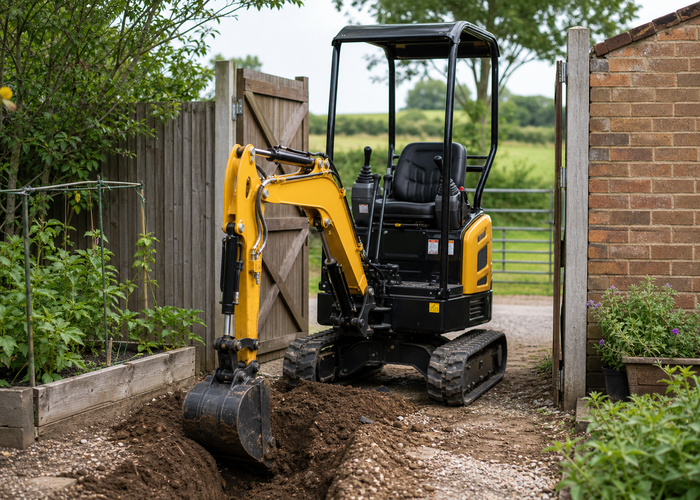
A 1 ton mini excavator looks simple, but it creates a lot of buyer confusion. Some people expect it to replace a larger construction excavator. Others underestimate it and miss how useful it can be in tight-access work. If you are comparing compact machines, start with our mini excavator resources, then use neutral safety references such as CDC/NIOSH trenching guidance when planning excavation work.
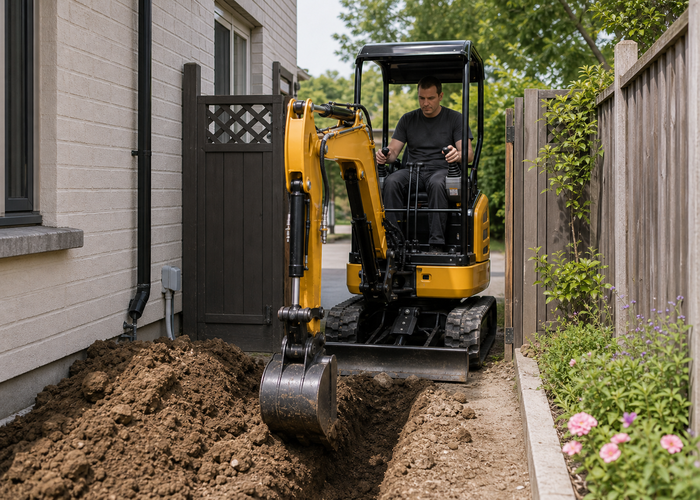
The Best Reason to Choose a 1 Ton Machine
The main advantage is access. A 1 ton mini excavator can work where larger machines may not fit: garden gates, narrow residential paths, small farms, greenhouses, utility corridors, and tight renovation sites. It is useful when the job is too slow by hand but too confined for bigger equipment.
You should think of it as a precision tool, not a brute-force tool. It is ideal for shallow trenching, small drainage lines, planting holes, light grading, fence lines, soft-soil digging, and property maintenance.
What It Can Do Well
| Task | Suitability | Technical Note |
|---|---|---|
| Backyard trenching | Strong | Best with narrow bucket and planned spoil placement |
| Farm drainage | Strong | Works well in soft or moderate soil |
| Garden renovation | Strong | Low footprint helps protect finished areas |
| Fence and post work | Strong | Better with auger attachment |
| Small stump cleanup | Moderate | Depends on root size and soil conditions |
| Material handling | Moderate | Hydraulic thumb helps, but lift capacity is limited |
| Hard demolition | Limited | Larger machine or breaker-ready setup may be needed |
| Deep utility excavation | Limited | Digging depth and stability may be insufficient |
The Limits You Should Respect
A 1 ton mini excavator is not designed to win against every stump, rock, slab, or deep trench. Its lighter operating weight means lower stability and less breakout force than larger models. If your work involves deep foundations, heavy lifting, rocky ground, or constant concrete breaking, a larger model may be more efficient.
This is where second-person buying discipline matters. Do not ask whether the machine is “powerful.” Ask whether it is powerful enough for your repeated jobs. Occasional hard work is different from daily hard work.
The Specification Questions That Matter
Ask the supplier for operating weight, overall width, digging depth, dumping height, track width, blade width, bucket size, hydraulic flow, and engine documentation. If the machine will be imported, review destination rules early. For U.S. buyers, EPA import guidance for vehicles and engines is a useful starting point because nonroad engines may need proper documentation.
Also ask for a short test video. The video should show cold start, travel, swing, boom, arm, bucket, blade, and auxiliary hydraulics if included. A small machine should feel smooth and controllable, not jerky or weak.
Match the Machine to the Site
Before you order, measure the real site:
| Site Factor | Why It Matters |
|---|---|
| Narrowest gate or path | Decides whether the machine can enter |
| Soil type | Affects digging speed and bucket choice |
| Required trench depth | Must be within practical digging range |
| Spoil placement area | Small sites need careful material handling |
| Operator experience | Smooth controls matter for first-time users |
| Maintenance access | Filters, grease points, and hoses should be easy to reach |
For more planning support, use the Gotrum Gear contact page with your site dimensions and job list.
When to Move Up in Size
Choose a larger mini excavator if you need more reach, deeper digging, faster cycle times, higher lifting capacity, or stronger attachment performance. A 1 ton machine is excellent when access is the problem. It is less ideal when productivity in heavy work is the main goal.
If you are a dealer, do not position a 1 ton excavator as a universal machine. Position it as a compact solution for residential, farm, rental, and light contractor work. Clear expectations create happier buyers.
Final Technical Advice
A 1 ton mini excavator is valuable when you buy it for the right reason. It saves labor, enters tight sites, handles practical property tasks, and pairs well with simple attachments. But it should be selected by work profile, not by appearance. Define your jobs first, then verify the machine.
FAQ
Can a 1 ton mini excavator dig a trench? Yes, especially for shallow drainage, irrigation, landscape, and utility-style trenching. Confirm required depth first.
Is a 1 ton mini excavator good for stumps? It can help with small roots and loosened soil, but large stumps may require more machine weight and breakout force.
Can it fit through a backyard gate? Often yes, but measure the narrowest real access point and compare it with track and blade width.
Who should buy a 1 ton mini excavator? Property owners, small farms, landscapers, rental businesses, and contractors who need tight-access capability.